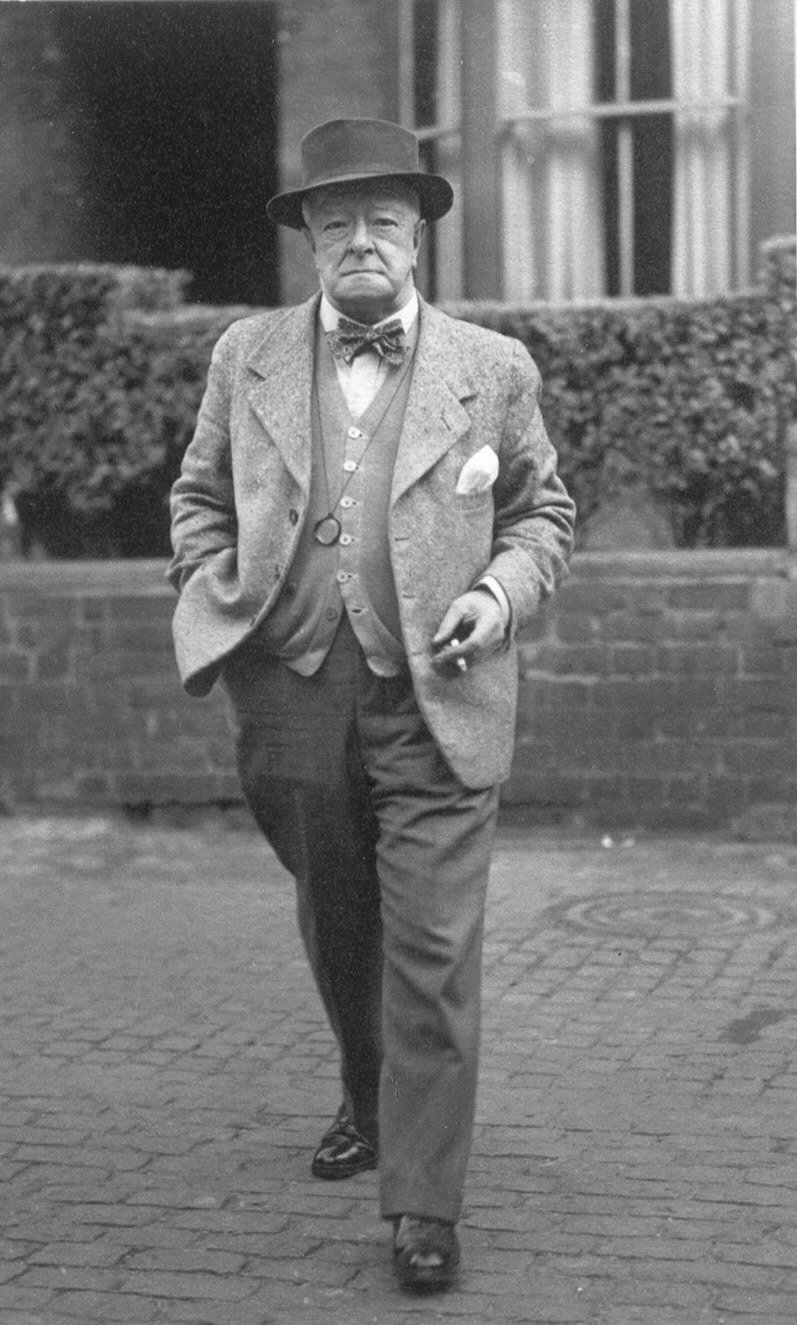
Dr Arthur Nicholas Whistler Colahan
1884 - 1952
COMPOSER OF THE IRISH SONG 'GALWAY BAY'
Maidin Mhaith from Aotearoa, New Zealand
A chance encounter with Brian Donnellan, a Galwegian, in Washington DC led me to get involved with the ‘Arthur Colahan story’ as Brian and I asked ourselves whether we could get renewed interest for him in Galway. After all, Arthur had written a global best seller song called Galway Bay, which had a new life with Celtic Woman and The Pogues. There had been a memorial to Galway Bay on the Prom in Galway ten years ago but it had quickly ‘disappeared’. Also that Arthur had been buried in an ‘unknown paupers grave’, when there was a COLAHAN family grave in the same cemetery. This was curious to us!
Dr Arthur Colahan was my great-grandfather's nephew and John Colahan was a Surgeon-General in the British Army who was also an early photographer taking photos of wherever he went. I am not going to elaborate on this history though with an Irish audience but please know that from being born an Australian and having New Zealand citizenship, I have an understanding of the British colonial practices and of Ireland’s history too.
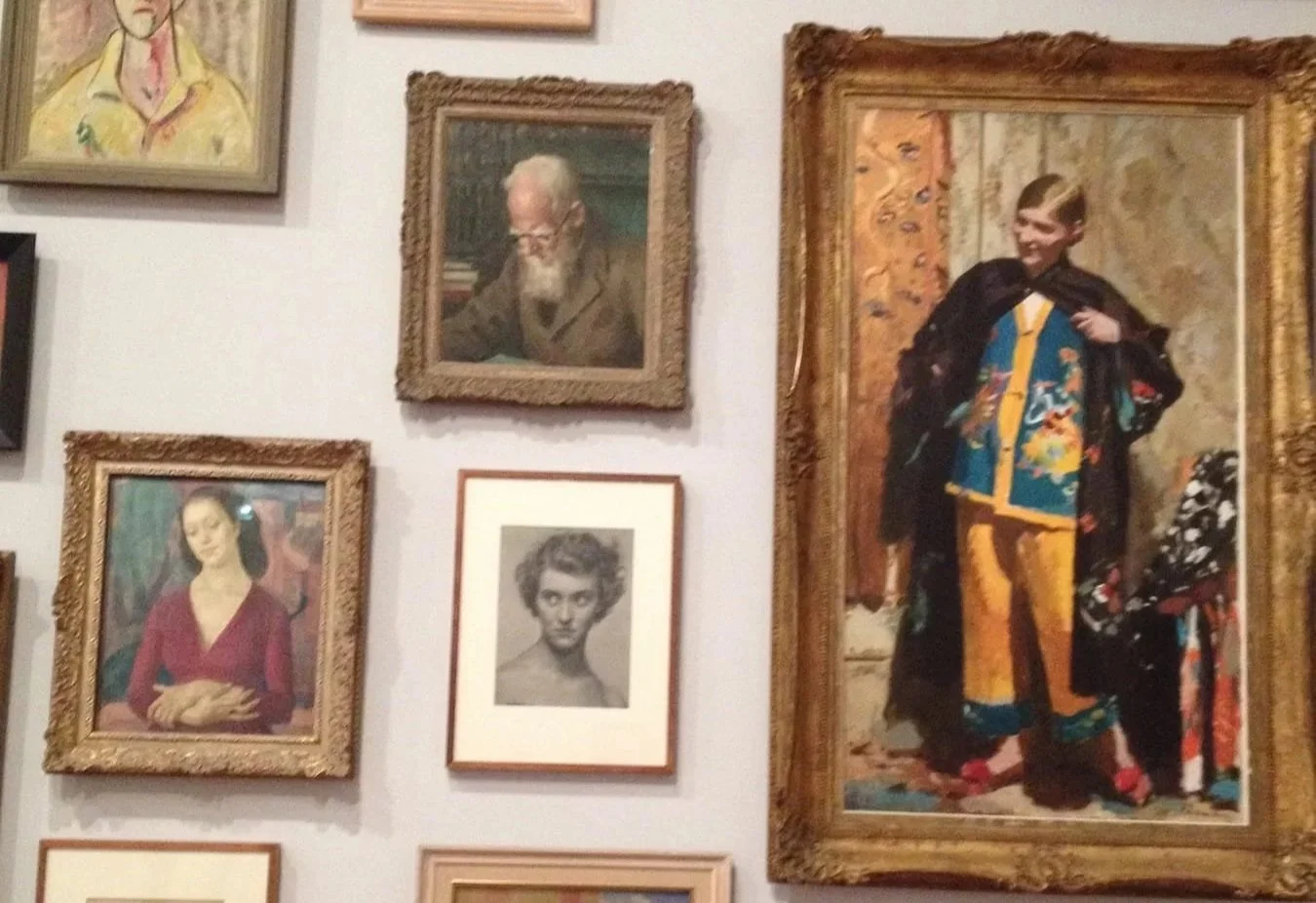
I grew up in Melbourne with the Colahans’ close by. Moth eaten military regalia, a Steinway grand (never played), a 3-D Roma plate, carved elephants and other exotic memorabilia was a part of our ancient and modern life. The Colahans in Australians were distinctive : talkative, lively, funny and physically short - always with tales to tell and embellish. My father was a modernist architect, a specialist in the design of hospitals. He loved the Australian bush, landscapes and creatures and has a reserve named after him in Central Victoria with Bush Heritage Australia. His uncle was Colin Colahan, a well-known painter in Melbourne until he moved to London permanently, later to northern Italy. Colahan was a a part of the Melbourne tonalist style of painting around artist, Max Meldrum.
The Colahan family still produce a lot of doctors but for some reason I was drawn to know more about Arthur's story, where he distinguished himself with songs as well as a life as a doctor. Arthur Colahan has been compared to other creative medical men such as Arthur Conan Doyle and A.G. Cronin, who achieved more fame in artistic fields than in their chosen professions.
Arthur Colahan was the first child born to Sarah Whistler and Professor Nicholas Whistler Colahan in 1884. The family moved from Enniskillen to Galway as Dr Colahan took up a new post and they lived in a house on The Crescent and were looked after by three domestic staff, one of whom was a nurse. Arthur was known to have started schooling at ‘The Bish’, at age thirteen and perhaps we can take from this that his early years were spent in relative freedom, being tutored at home.
At school and university, Arthur was popular and his carefree nature and sociability were factors that prolonged his student days. His musical talent, inherited from both his parents, provided a further diversion from his medical studies, which emerged to be his greatest claim to fame as the composer of Galway Bay. It is said he was never happier than being at the piano, playing tunes for songs he had created. He remembered his songs by heart, not by writing them down and could always be called upon to entertain at parties.
As World War 1 loomed, Arthur’s carefree days were over. He had started his medical career as house surgeon in the County Infirmary on Prospect Hill, while holding a teaching role at the College. He and a young teacher, Mary Theresa Curley met and had a whirlwind romance, marrying soon after. Arthur became the Assistant Master at the Maternity and Gynecological Hospital in Holles Street.
In 1916, Arthur joined the Royal Army Medical Corps and his service was in India, where he provided medical care to British troops. Arthur relinquished his commission early in 1918 due to gas poisoning which affected his health for the rest of his life. Professor O Cearbhaill says he believes his health may have been a factor in the breakdown of the marriage to Mary.
Arthur moved to Leicester where he spent the rest of his medical career and life - over thirty years - establishing a successful medical practice and by the 1930s, in psychiatry too working as a neurological specialist with the Ministry of Pensions for the police and prison services. He wrote a book called The Miracle of the Human Body, published by Oldhams in 1950. Leicester Council has a plaque on his home at 9 Prebend St, Leicester to give due recognition to his services to Leicester and honour him as a doctor and songwriter.
In 1947, Galway Bay was recorded by Hollywood star, Bing Crosby and the recording was included in the film The Quiet Man. It became the third best selling song in the world and took on a life of its own. Arthur’s friend, Dr John Lyons of Kilkelly, Co. Mayo, would say that he had “never heard such a cry from an Irish heart wanting to come home as that uttered in Galway Bay which probably sums up why it became a well-loved song.”
The song still resonates among the Irish at home and in their diaspora communities, all over the world. To see the scale of numbers of Irish overseas, one only has to look at the recent release of the first full census of independent Ireland. These almost 3 million records will be of great significance to Ireland’s population, and it states there is a global diaspora of some 80 million claiming Irish ancestry.
Towards the end of his life, Arthur knew of the success of Galway Bay. A story appeared in the Leicester Evening Mail in 1948 and says : Dr A. Colahan has turned his song-writing into a lucrative dollar-earning business. One of his compositions Galway Bay has recently jumped to the top of the best seller lists in England. Dr Colahan told our reporter that he had been composing songs for many years. Some of them had been broadcast on Irish radio but none had been published until the war. Yesterday he returned from Dublin where he had been to discuss arrangements for more of his songs.
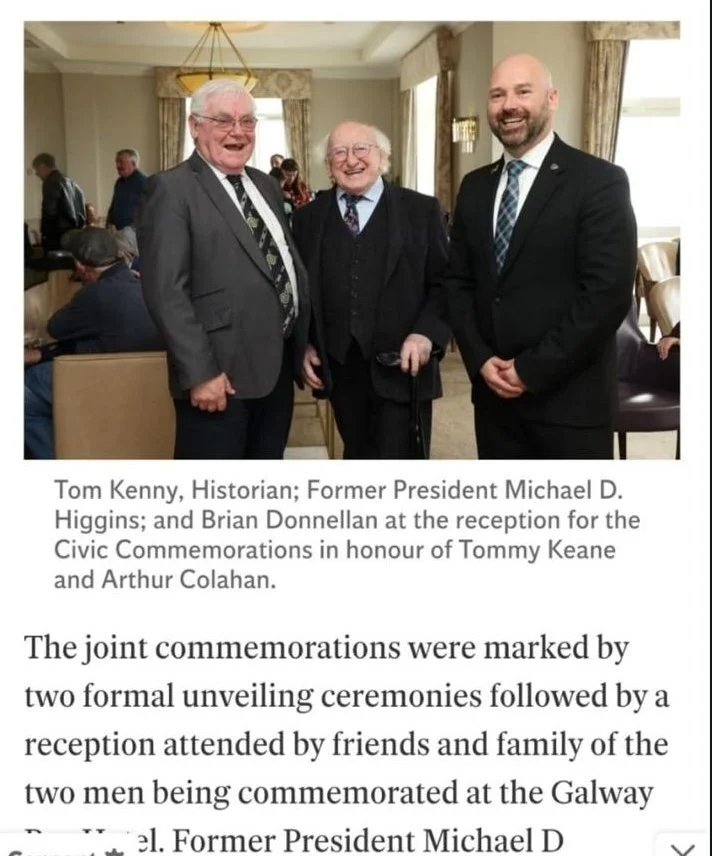
I want to express my heartfelt thanks to the late Professor Diarmuid Ó Cearbhaill, of the Galway Archeological & Historical Society for the research he did in an article The Colahans - A Remarkable Galway Family (Vol 54 2002) bringing to life the culture of Galway and its surrounds and of the lives and movements of later nineteenth century doctors and professors. His focus on the Colahan families, and especially Dr Arthur Colahan, was particularly insightful.
Thanks to Garry Kinnane for his book Colin Colahan : A Portrait.
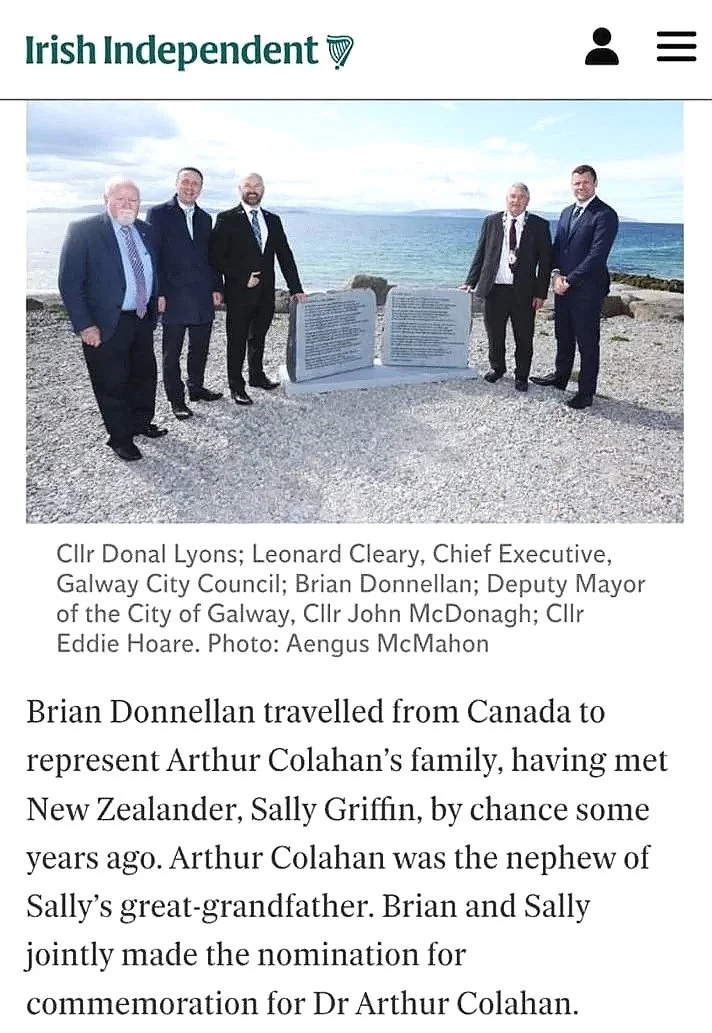
And finally, our warm thanks and gratitude to Mayor Mike Cubbard and the Galway Councillors for creating this beautiful memorial sculpture on the shore of Galway Bay for Arthur Colahan, the creator of many Irish ballads. No doubt this wonderful memorial, like the song Galway Bay will continue to stand the test of time. Brian and I love the significance that it has to the Canada-Ireland 180 initiative to Remember, Reflect and Reimagine.
Le gach dea-mhéin - Sally Colahan Griffin, May 2026
Thanks too that contributed with research and in other ways : Cr Michael Lee (Auckland Council), Marcus O Conaire (Galway Council), David Parkyn (New Zealand), Lyndie Griffin (Australia), Mireille (Mimi) Colahan (London), Liz Grant (New Zealand) and Rowan Gibbs (New Zealand)